
For the people living in circumpolar parts of the world, access to health care is often limited by ongoing economic disparities and systemic barriers. In Canada, these challenges have created significant health gaps between Inuit and non-Inuit populations.
According to Statistics Canada, there are 70,545 Inuit people in Canada, and approximately 70% live in Inuit Nunangat, the Inuit homeland. The homeland includes more than 50 communities across four regions in a broad geographic area, spanning approximately 4 million square kilometres of land, water and ice. Health care in these remote communities is typically provided by nurses in community health centres, and most residents must travel outside their communities for diagnostic testing, specialist care and even to give birth. By some estimates, as many as 40% of Inuit in Canada must travel outside their communities to access health services each year.
Health services for Inuit are delivered through a complex system of federal, provincial and territorial arrangements that can be frustrating to navigate. The Government of Canada funds and administers a range of health programs, including the Non-Insured Health Benefits (NIHB) program, which covers eligible health services not insured by provincial or territorial programs, including prescription drugs, dental and vision care, counselling, medical supplies and equipment, and medical transportation. In theory, the NIHB is designed to address the specific needs of Inuit communities, but in reality, because of limited access to specialized care, many Inuit patients must travel long distances for medically necessary treatment, including tests, surgical procedures, cancer care, dialysis, mental health services and pediatric subspecialties.
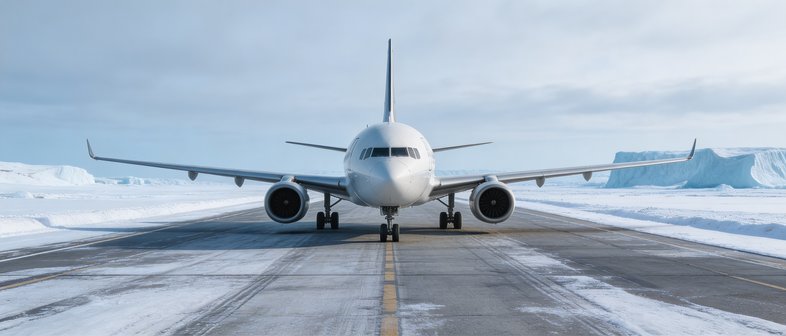
Many of those trips are to Edmonton, which serves as a medical hub for Inuit patients travelling for essential health care. The journey to Edmonton can be as far as 1,800 km, depending on the specific community, with flights often taking more than 10 hours, depending on routes.
Travelling for essential care
Kimberly Fairman, former Executive Director of the Institute for Circumpolar Health Research and now a research fellow there, has travelled for health care most of her life. “When I was pregnant with my first child, we were living here in Cambridge Bay and, if it was one’s first pregnancy, you had to leave the community four weeks before your due date,” she recalls. “This was 36 years ago, and back then, you only got 17 weeks of maternity leave. When I went south to Yellowknife to have my son, I had to apply for my maternity leave benefits at the same time. I went past my due date by six days, which meant that by the time I got home, I only had 11 weeks of maternity leave left. So I went back to work when he wasn’t even three months old.”
Almost four decades later, while the length of maternity leave has increased, the process of having to leave your home to give birth has not. “In Cambridge Bay, they have a midwifery program and they have midwives, but midwives are not allowed to deliver babies,” explains Fairman. “The midwives can provide prenatal and postnatal support, but you still have to travel to give birth. And that means leaving family, friends and your community behind. It’s a very isolating experience.”
Inuit patients who travel to Edmonton can access Larga Edmonton, a for-profit specialized boarding home and care facility. Access is usually coordinated by medical travel coordinators in home communities, but because demand is high, there can be waits for accommodations. In those instances, there are overflow hotels or other community organizations that can assist. While there is funding available for non-medical companions to accompany patients, there are strict criteria for assistance, and if those criteria are not met, costs may not be covered.
Fairman knows of situations where the Territorial government has refused to pay for escorts to accompany elderly patients, leaving them travelling alone and afraid. She recalls one instance where an elderly patient who had mobility issues and impaired vision was refused an escort. “This is someone who should never have been travelling alone … travel for health care is already stressful, and having to navigate it by yourself makes it worse. The system pays for tickets, but the travel itself is brutal, especially when you are alone. Winter lasts from September to May or June. Temperatures can be –40°C or colder with wind chill. Elders have to go from the terminal to the plane in extreme cold. Planes are cold, delays are common, and sometimes people wait for hours without proper support. The system doesn’t account for rest or recovery, especially for elders. It’s about getting people from point A to point B, not treating them humanely.”
Inuit Treaty Right to Health
Challenges with accessing benefits through NIHB are in contrast to the intent behind the Inuit Treaty Right to Health, which recognizes the obligation of the Government of Canada to provide adequate health services to Inuit peoples. In practical terms, treaty rights underpin the funding and administration of health programs, ensuring that Inuit communities have a voice in the design and delivery of services. Unfortunately, many Inuit report encountering barriers in accessing NIHB-provided benefits, including complicated paperwork and requirements for pre-authorization that can lead to delays or denials of coverage.
Fairman has had her own experiences with those barriers.
“When my youngest daughter needed braces, my husband and I did not have health benefits through work, so we turned to the NIHB. The dentist’s office sent me a package that was 30 pages long with information that was coded. I’m educated and know how to navigate the system, but this was overwhelming. How was I supposed to know codes for overbite?” recalls Fairman. “It leaves you feeling lesser than.”
Often, Inuit choose to pay out of pocket rather than try to navigate the mountains of paperwork required by NIHB, which can take months to complete. Even for those who manage to submit the necessary paperwork, the approval process includes not only barriers but also experiences of systemic racism.
“With my daughter’s braces, once the request to NIHB was submitted, it came back denied because she had a pinpoint cavity in one tooth, a cavity so small the dentist had chosen just to watch it rather than do a filling. The rule is that if you have a cavity within six months of applying for braces, you'll be denied because ‘if you don’t take care of your teeth, we're not going to help you fix them’ … no other insurance company has that requirement, but because we are Inuit, the expectations are different. It’s systemic racism.”
The impact of health inequities and socioeconomic factors
Ongoing barriers to health care combined with broader socio-economic factors have resulted in Inuit in Canada experiencing poorer health outcomes than non-Inuit Canadians. The Canadian Geographic Inuit Peoples Atlas of Canada reports that a child health survey conducted in Nunavut “found that some 31% of Inuit infants were hospitalized for bronchiolitis during their first year of life, and 42% of Inuit children had sought medical attention during the previous year for a respiratory illness … as well, nearly 60% of infants aged nine to 14 months in Nunavik are anemic (primarily due to insufficient nutrition).”
Inuit in Canada have a significantly lower life expectancy than the general Canadian population, with estimates placing it at approximately 64-71 years for men and 73-76 years for women, a difference of roughly 10-15 years compared to non-Inuit Canadians. This lower life expectancy is due, in part, to high rates of suicide in youth, chronic diseases and reduced access to health care.
Inuit also often face extreme poverty. Housing is often crowded, and it’s not uncommon for two or three families to live in one home. As Fairman explains, “in smaller communities, houses rely on trucked water and sewage. Running out of water is common. Families have to decide whether to shower, do dishes or do laundry. And if someone is sick or has wounds that need cleaning, the lack of water becomes a serious health issue.”
Compounding that problem, the cost of groceries and other necessities is much higher in circumpolar regions than in other parts of Canada. High transportation costs, limited retail competition and structural barriers mean it is not uncommon for a family of four to spend $1,600-$2,000 per month on groceries, with staple items such as milk, produce and meat costing dramatically more than in the rest of Canada. In some remote communities, a roasting chicken can cost $65/lb, tomatoes more than $10/lb and a 10 lb bag of potatoes more than $30. “It’s not about people not knowing how to budget or how to choose nutritious food. In reality, they simply don’t have access to enough resources or affordable food.”
In adults, food insecurity can negatively impact physical and mental health, leading to higher rates of diabetes, heart disease and depression. In children, food insecurity can impact a child’s physical, cognitive and psychosocial development. For many, the consequences of food insecurity are the very reasons they need to travel for care.
A changing geopolitical climate
Recent changes in geopolitical dynamics, particularly those stemming from the Trump administration’s repeated threats to annex Greenland, have created new worries for circumpolar peoples. “People are absolutely concerned about broader issues like Arctic security, Russia and global politics,” explains Fairman. “In many ways, this is due to a lack of information, where we don’t know exactly what is going on. During COVID and during the war in Ukraine, I had family members calling me, looking for explanations because they weren’t getting clear information from governments. Whenever systems aren’t responsive, people feel exposed and vulnerable. Right now, there is definitely worry about what the U.S.A. has planned, but immediate needs like food and housing are always at the forefront.”
What Inuit patients need
Fairman notes that while it would be ideal if there were more health care resources available closer to home for Inuit Canadians, ongoing workforce shortages mean this is unlikely, particularly as urban southern communities also struggle to recruit and retain their health care professionals. What can happen is more informed, responsive care for Inuit patients who are required to travel long distances for treatment.
“Realistically, I know physicians don’t always have the support to deliver attentive, shared care. Appointments are 15 minutes long, and there’s a huge administrative burden involved in seeing patients from remote communities. But for that patient, that appointment is critical. They have travelled long distances to be there. They are far from home, sometimes afraid, and they have so much riding on physicians taking the time to really listen in the time they have with them. I always tell people who travel for care to ask the question, ‘If this doesn’t work, what’s next?’ Physicians are so focused on the moment, but those patients have lives outside of that room, and they need to know what happens once they head back home.”
- What should Albertans expect from their health care system?
- Informed Reform campaign moves into phase III
- Patients First: Health care works best when it is shaped by the people who experience it every day
- Improving public awareness of an unseen medical speciality
- And 10 more articles in March-April 2026