
At the Spring 2025 Representative Forum, RF delegates voted overwhelmingly in favour of establishing a new section focused on Indigenous health. The AMA is the first provincial or territorial medical association to establish a Section of Indigenous Health.
The vote took place on Friday, March 14 after a presentation from Dr. Cassandra Felske-Durksen, an Otipemisiwak family physician and Chair of the AMA’s Indigenous Health Committee.
The urgent need to focus on Indigenous health
During her presentation to the Representative Forum, Dr. Felske-Durksen explained that Indigenous health has become a well-established discipline within the profession of medicine. She noted that both the College of Family Physicians of Canada and the Royal College of Physicians and Surgeons of Canada have Indigenous health departments and are actively enhancing accreditation requirements. At the same time, many Canadian medical schools have dedicated undergraduate and postgraduate electives, a residency program and/or an enhanced skills program in Indigenous health.
“The colleges and the medical schools know that this is needed, in part, because the health of Indigenous people is worsening,” said Dr. Felske-Durksen. She noted that the situation in Alberta is particularly dire and referenced recent data from Alberta Health that showed in 2023, the average life expectancy for First Nations Albertans was 62.81 years compared to an average life expectancy of 81.88 years for non-First Nations Albertans. “That’s a 19-year gap,” she explained. “A gap that has widened by eight years since 2019.”
While some of that can be attributed to an alarming rise in opioid poisonings, much of it is also due to ongoing systemic health inequities and barriers in accessing care.
“In my own practice, we believe, and are conducting a study to confirm, that the maternal mortality rate for Indigenous women may be as high as 4%, compared to the provincial average of 0.00002%. That’s a maternal mortality rate that is 200,000 times higher than it is for women across the province,” stressed Dr. Felkse-Durksen. “Together with Dr. Rebecca Rich, a non-Indigenous obstetrician gynecologist, we see some of the most complex prenatal patients within Western Canada. We receive direct referrals from up to five provinces and all three territories. Almost all the patients we work with are Indigenous – and survivors of the cycle of apprehension and human trafficking. Based on what we know currently of the data, this alarming disparity in maternal mortality is almost completely attributed to non-obstetrical causes.”
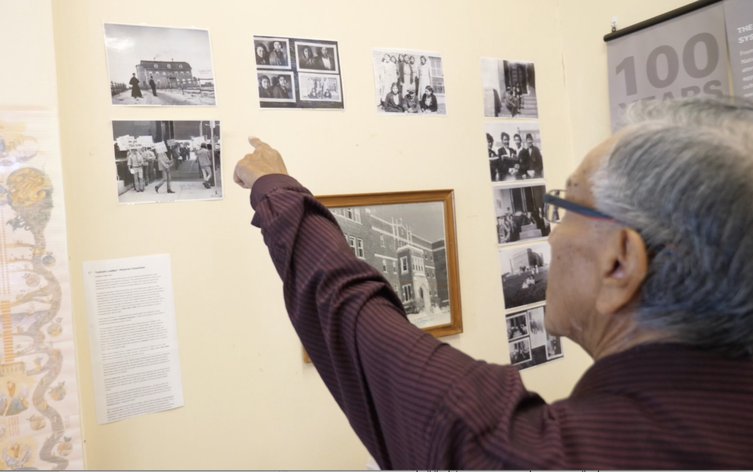
These numbers are a reminder that Alberta’s legacies of having the highest number of residential schools and Indian hospitals in Canada remain powerful determinants of health. The Indian Residential School Settlement Agreement identified 139 residential schools across Canada, and 25 of those were located in Alberta. Alberta also has the dubious distinction of having the most Indian hospitals. From 1945 to the mid-1980s, 29 segregated Indian hospitals operated across Canada and seven of those were in Alberta.
“We, as Alberta physicians today, did not create these legacies – but we did, unfortunately, inherit them,” explained Dr. Felske-Durksen. “Many physicians feel a sense of shame or responsibility when Indigenous health is discussed but the reality is this is a result of generations of anti-Indigenous legislation and policies including medical experimentation, segregated health care, and forced sterilization – meeting the United Nations Definition of genocide.
It’s embarrassing, and that is why our predecessors struggled to raise it in our curriculum, on rounds or in the clinic. We trained to not know these particular (colonial) determinants of health, I believe with the hope that they would wash out, go away, with time. We are the first generation to name and start to know the legacies intimately and see that anti-Indigenous implicit and explicit biases live on.
I believe we need to, as a profession, pull ourselves out of the shame shack and hold each other up as models of change. Establishing this new Section of Indigenous Health will allow the AMA to continue its work to address past and current injustices to Indigenous communities in Alberta.”
What a Section of Indigenous Health will make possible
The Government of Alberta has prioritized Indigenous health in Budget 2025, allocating $45 million for Indigenous health initiatives over the next three years to address health inequities and promote health, wellness and increased choice. Although there are no details yet on what those initiatives will involve, the new Section of Indigenous Health will help physicians who care for Indigenous Peoples advocate to make sure those initiatives address the most pressing health disparities.
Having a Section of Indigenous Health will make it easier for those physicians to share what they see and experience within our health care system, and will help develop a deepened cultural competency for the entire profession within Alberta. This new section will create a mechanism for those who care for Indigenous patients to have a voice in decisions that impact their work, including eligibility for new funding models or programs, and educating decision-makers about the unique challenges they encounter in delivering care
“Ultimately, this new section will make it possible for us to address barriers to care and improve access for our patients.”
The new Section of Indigenous Health will not be an economic section within the AMA – the Section of Family Medicine will determine allocation matters. Nor will it be exclusive to Indigenous physicians – anyone who cares for Indigenous patients is welcome.
Allowing the AMA to continue being a leader in Indigenous Health
The new Section of Indigenous Health will ensure the AMA continues to be a leader in Indigenous health. The AMA was already the first medical association in Canada to have a Policy Statement on Indigenous Health and an Indigenous Health Committee, and now becomes the first provincial or territorial medical association to establish a Section of Indigenous Health. It makes our commitment to Indigenous health clear at a time when there is a global rise in threats to human rights, especially for under-represented peoples.
It also ensures the AMA is in alignment with the CMA's ReconciliACTION plan, which focuses on advancing reconciliation, promoting Indigenous health, and acting against anti-Indigenous racism in health care.
The process of establishing this new section will also create a pathway for those who want to advocate for the unique health challenges of other under-represented groups.
“There is a word in Michif, the language of the Métis, Tawâw, pihtikwî, that means “There is room, come in. You are welcome, ” explains Dr. Felske-Durksen. “I believe establishing this new section will make it clear that there is room for all within the AMA. It will demonstrate that we are committed to working toward health equity for everyone, including all the relations who host us.”
The process to launch the Section of Indigenous Health, including plans for a celebratory ceremony, is underway. Watch for more information in the coming months.
Banner image: Bison represent respect, connection, loyalty, family and working together.
Suggested readings:
- A bison teaching from Laura Forsythe, who is Métis and works for University of Manitoba.
- Senator Yvonne Boyer also has teachings she's shared online.