
When a patient describes their psychiatrist as a hero, it speaks volumes about the quality of care and connection they’ve experienced. For one Albertan, Dr. Nadia Tomy has been exactly that – a steady, compassionate presence over many years of care.
“When I first started seeing Dr. Tomy, I was on a path of darkness and hopelessness,” the patient shared. “With her support, I managed to obtain a university degree and now work in mental health and addictions myself. She has always believed me – and believed in me.”
This nomination reflects the core values of the AMA’s Shine A Light program: recognizing physicians who provide exemplary care, improve patient and community life, and contribute to a high-performing health care system.
When we spoke with Dr. Tomy, she expressed genuine appreciation for the recognition and approached the conversation with the same thoughtfulness she brings to her clinical work.
“I’m not very eloquent,” she said with a smile. “Most of my sessions are spent listening. I’m not actually used to doing the talking, so I might not be as polished in an interview.”
Her humility was evident – but so was her insight. Keep reading to learn more about Dr. Tomy’s approach to care and the impact she’s had on her patients and community.
Professional background and training
Dr. Tomy began her academic journey at the University of Manitoba, earned her medical degree from the University of Ottawa, then returned to Winnipeg for the early years of her psychiatry residency. She completed her final two years at the University of Alberta, where she found a supportive team and environment that shaped her approach to care. She has remained in Edmonton since 2007.
Clinical approach and therapeutic philosophy
Drawn to psychiatry for its integration of medicine and human connection, Dr. Tomy emphasizes a holistic patient-centered approach. Her therapeutic style is integrative and flexible, informed by training in a wide range of modalities – from psychodynamic and insight-oriented therapy to trauma-informed and body-centered approaches. She emphasizes that no single method fits all patients.
“We need everything,” she explains. “People are complex, and different tools work for different situations.”
She also highlights the importance of adjusting treatment intensity – whether through medication, session frequency or therapeutic modality – based on the individual’s needs. “It’s about what works and what constitutes treatment,” she says.
Resilience and adaptation through adversity
Reflecting on how we cope through adverse events, specifically the COVID-19 pandemic, Dr. Tomy observed a wide range of responses among her patients. Those with established therapeutic relationships and coping strategies often demonstrated remarkable resilience.
“They knew themselves well and had the tools to manage stress,” she says. “But for others, the pandemic was a new and overwhelming challenge that exposed vulnerabilities that were previously unknown.”
She notes that the pandemic taxed all determinants of health – financial, physical, emotional and social. For some, it prompted a kind of self-reckoning. “If a person had any vulnerabilities, they were likely to be exposed,” she adds.
Evolutionary psychiatry and the role of diagnosis
Evolutionary psychiatry explores how certain mental health symptoms may have served adaptive purposes. Dr. Tomy uses this lens to better understand patient experiences. “Take depression, for example,” she explains. “It may function as a way to conserve energy until it’s safe to re-engage. Mental health conditions are complex, and it’s important to try to understand and support adaptive strivings while also understanding maladaptive patterns that no longer serve the person.”
When asked about the rise in self-diagnosis driven by social media, Dr. Tomy sees value in self-reflection. “It’s good to be curious about oneself,” but she cautions against over-identifying with diagnostic labels. “A diagnosis isn’t an identity,” she says. “The risk of under diagnosing is missing something that could be treated. The risk of over diagnosing is missing the person behind the diagnosis.”
Ongoing learning and modalities
Dr. Tomy’s approach is grounded in relational, insight-oriented and dynamic psychotherapy. She continues to expand her training in trauma-informed and body-centered therapies.
“When someone is in a trauma state – fight, flight, freeze or fall – it’s hard to think clearly. Helping them reconnect with their body can help regulate the system,” she explains.
She believes that most clinicians draw from multiple modalities in practice, adapting to the needs of each patient.
Staying grounded in a noisy world
When life becomes overwhelming, Dr. Tomy recommends returning to the basics: connecting with the body, leaning on support systems and identifying what truly nurtures well-being.
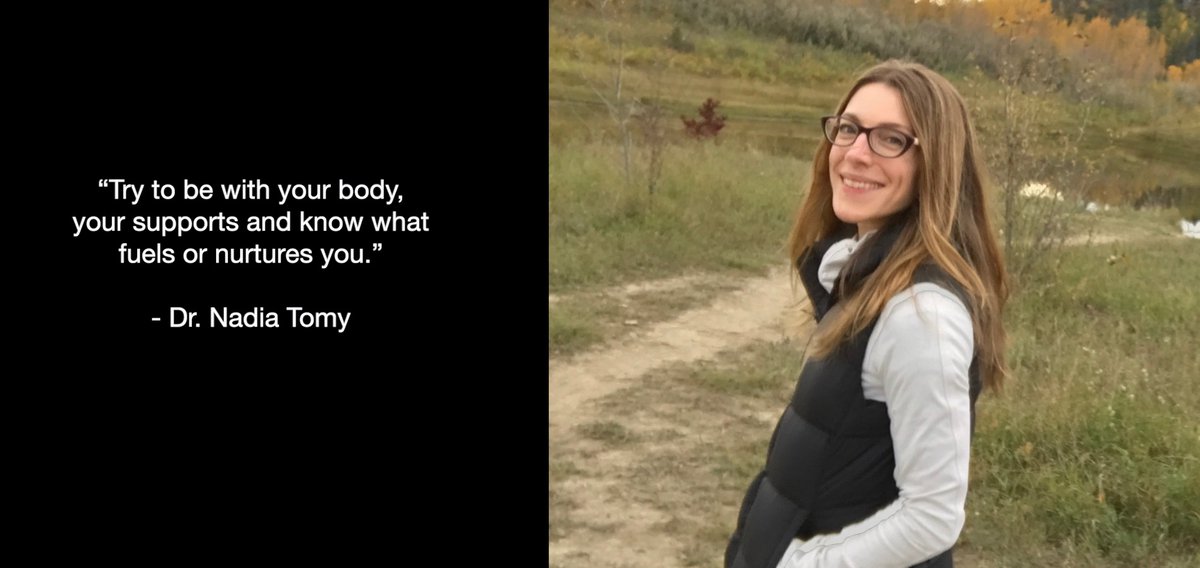
“I think sometimes it’s about staying with the basics, no matter what’s going on that’s chaotic,” she says. “Try to be with your body, your supports and know what fuels or nurtures you.”
Inspired by resilience, guided by connection
Asked what she finds most rewarding about her work, Dr. Tomy reflects on the privilege of witnessing human resilience. “I chose this specialty because I enjoyed the integration of medicine and relationship – connecting with and understanding the patient. What is most rewarding is bearing witness to people’s resilience.”
Her long-standing commitment to individualized compassionate care exemplifies the values of the Shine A Light program. Through her work, Dr. Tomy continues to make a meaningful difference in the lives of her patients and in Alberta’s mental health care system.
About the Shine A Light Program
The AMA’s Shine A Light Program allows individual patients or community members to recognize AMA member physicians for the following:
- Providing exemplary care that made a difference in a patient’s life.
- Spearheading projects that improve patient and/or community life.
- Contributing to a high-performing health care system.
Do you know a physician who goes above and beyond to care for their patients? You can nominate them for the Shine A Light program on the AMA website.