
Alberta’s future doctors met recently with members from both parties (UPC and NDP) as advocates for the medical profession. We clearly delivered a powerful message that cannot be understated: “There’s a big problem – the time to fix this is now!”
Advocacy is a word I probably heard three times a year before medical school. Now, I hear it daily! Whether it’s the political climate of the past year, the nature of medicine, my work with the AMA or maybe my newfound status as a political podcast junkie, that word rattles around in my brain more than I ever thought possible.
Like many words that experience a dramatic uptick in usage, you sometimes need to remind yourself what they actually mean. The 2025 Provincial Day of Action (PDoA) was an insightful refresher of the rewarding, yet difficult nature of advocacy in Alberta.
Sponsored by the AMA and medical student associations from the Universities of Edmonton and Calgary, PDoA is an annual event where medical students research health care issues affecting Albertans and present actionable solutions to MLAs. Past years have focused on mental health, primary care and immunization promotion. This year, students chose to advocate alongside the AMA’s Acute Care Concerns initiative that highlights critical gaps in general internal medicine, obstetrics/gynecology, general surgery and oncology – services whose neglect has contributed to overcrowded emergency rooms and a system under immense strain.
It's quite easy to complain about our health care system. We could tell MLAs that "your constituents have to wait 12 hours in emergency rooms!” or “your constituents are sitting in pain for years waiting for joint replacements.” But the true challenge is crafting realistic, actionable solutions – and presenting them in a way that ends with "this is why you should care and how can we work together to ensure these solutions are implemented.”
To keep our points well-reasoned and research-driven, we included student survey data, which shows that many medical students are deeply aware of the government’s reputation in health care and how it factors into their decision to stay or leave post-training.
After months of research, hotel bookings, meeting coordination, and every detail in between, the day was near. Around 40 U of C and U of A medical students gathered in a U of A lecture room for pre-PDoA training day – a crash course in Alberta’s health care landscape and the urgent changes needed to stabilize acute care. AMA’s Shannon Rupnarain and Natalie LaBuick, alongside Crestview Strategy’s Mandi Johnson, joined us for some helpful tips, talking points and meeting etiquette for the day. These 40 students met with over half of Alberta MLAs in the Legislature the next day.
Most MLAs listened intently as we outlined the pay discrepancies between OB/GYN and other surgical specialties, the lack of tier 1 supports across the system, and the ways that Alberta’s system fails patients time and time again. Many wide eyes and furrowed brows agreed with us that this is a problem, especially when they read that “18.5% of medical students are optimistic about the future of health care in Alberta.”
When the inevitable question arose – “What can be done to fix this?” – we laid out clear steps:
- Expand social worker coverage to clear patients on weekends.
- Reinforce surgical supports to curb diversions across the province.
- Modernize outdated ARPs (some of which are older than many of the students!).
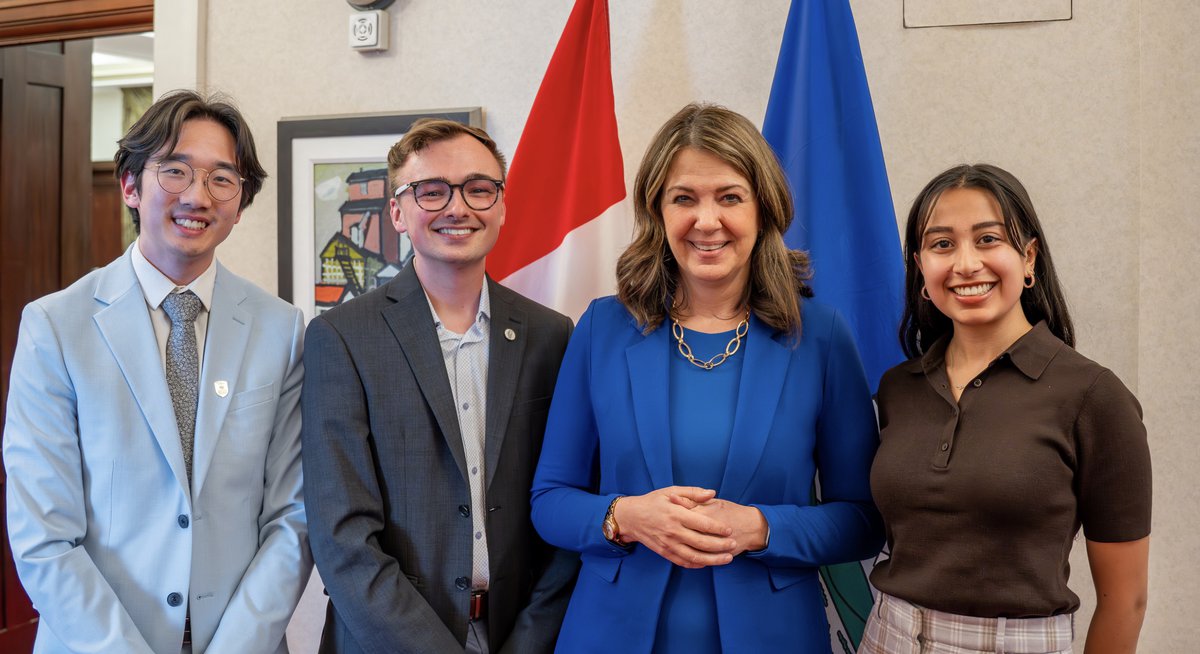
Three other students and I had the unique opportunity to meet with the Premier. She listened intently and took notes just like the other MLAs. When our meeting came to an end, she said “Thank you for your advocacy!”
There it was again – “advocacy”. A word I once barely noticed had now evolved into something deeply personal. It wasn’t just about naming problems; it was about ensuring that solutions were heard.
For Alberta’s health care system to thrive, this kind of advocacy must not be the exception – it must be the expectation.
Banner photo credit: Reef Downing
Click here to download a photo montage of the event (photographer credit: Reef Downing)