
“In these days enormous developments in the field of diagnosis have put a strain on the judgment of the practitioner. Now more than ever before he must avoid thinking that the laboratory and X-ray room can save him from taking a careful history and making a thorough clinical examination of his patient.” Preface to the 13th edition Hutchison’s Clinical Methods 1956.
Macleod’s Clinical Examination (10th Edition 2000) includes a third critical objective, namely: “to describe the various skills involved in taking a history, performing a physical examination appropriate to the clinical problem, and providing the patient with as clear an explanation as possible.”
Last year I went to Medicine Hat to do a cancer clinic. The first patient I saw had a breast cancer. We talked for 15 minutes as I took her history, and then said: “Can you put on a gown and sit on the examination couch please?”
She said: “Oh…so you’re an examination doctor?”
“Aren’t we all?” I replied, surprised.
“Oh no. My doctor doesn’t do examinations. He looks at his computer and reads the X-ray reports.”
But the question I had in mind was: Is this an isolated example? Or is it really happening? I fear it’s happening – and I’m afraid becoming more common.
Why have clinical examinations declined?
The cause of this decline in clinical examinations is multifactorial. One major reason relates to clinicians having an increased reliance on medical technology: why listen to the heart when an ECG and echocardiogram gives useful information? Further, the COVID-19 pandemic with social distancing led to many practicing limited contact. More importantly, however, physicians are spending less time at the bedside with patients and families due to the massive increase in paperwork with fewer secretaries, which pushes time with patients out of the way. Insurance forms and letters, disability forms, drivers’ licensing and eye-testing forms and other tasks mean the easiest thing to do is curtail physical examinations.
Another major impediment to time with patients is a technology which should be one of the greatest advances, but which is now another cause of delayed appointments, specialist consultations and surgery delays – and that is the “electronic medical record” (EMR) having to be dealt with by the physician or surgeon. The EMR seeks to improve patient care and safety, to better coordinate care among health care providers, engage patients by electronically providing them access to their records, reduce costs (no paper or storage) and the enhance efficiency of retrieving information. In the case of Alberta specialists, that means Connect Care the current Alberta EMR which is abysmally inadequate in many of these criteria.
The EMR could be a major advance, but now a simple process such as writing a prescription or filling out test request forms has become a many minutes long exercise in typing, ticking boxes, “clinic preparation time,” correcting and re-typing medication orders for something simple that was formerly written taking 10 seconds like: “tamoxifen 20 mgms p.o. daily for 6 months” can now take 5-10 minutes and sometimes more, clicking boxes and turning pages. This is absurd. This American program was designed as a billing program, but what is more important, in the USA now tends to be run by trained secretaries following instructions from doctors, not entered by medical doctors.
Many specialists have cut back their clinics just to cope with this time-consuming impediment instead of the time-saving instrument that it should be. And making matters worse, there are available AI programs which listen to the doctor/patient encounter and produces a good summary of the session for the medical record. Now, that is indeed valuable, as it requires only editing work on the doctor’s part.
A 2023 AMA Specialty Care Alliance survey of 737 physicians across 30 specialties found a 42% negative impression of how Connect Care impacted physician efficiency to deliver care, while 60% had a negative impression on the impact this EMR had on administrative time associated with clinical care. A poor score card for this expensive program.
I was schooled in the 1960s when the clinical history and physical examination were central to decision-making. In Edinburgh, MacLeod’s Textbook of Clinical Examination had just been published. There are now 15 editions of this beautifully written text. Sadly, in preparation for writing this article I searched in vain for my first edition copy. It was gone! I’ve bought a 10th edition on Amazon for C$9.80.
Over the last two decades, comments and some observations have suggested a deterioration in physical exam skills. A study of 2684 clinicians found that 66% of trainees said they had never been observed by a consultant while doing a clinical examination and 31% said a consultant had never demonstrated a physical exam to them. The widespread use and over-reliance on technology may contribute to the mistaken idea that physical findings are of secondary value to imaging techniques – they may be less precise but cannot be secondary. Lack of a physical examination may also contribute negatively to patient satisfaction and a dismissive doctor/patient relationship. Could it also be contributing to a decline in respect for medical science?
In October 2019, Richard Horton, Lancet editor, lamented: “Why don’t doctors touch patients anymore? Having attended clinics in the UK’s National Health Service almost every week since March this year, I can honestly say that at no stage has any physician, surgeon, or anaesthetist completed anything approaching a physical examination. The physical examination seems to have become an anachronism, a vestigial remnant, of clinical care.” (Richard Horton, Offline: Touch – the First Language. Lancet 394, no. 10206. Oct 2019).
The general physical examination is valuable on a first visit by an asymptomatic patient to a new doctor for diagnosing common problems such as being overweight, skin carcinomas (squamous and basal) high blood pressure, cardiac murmurs, asthma, some rheumatoid conditions, and certain other conditions, but a focused examination thereafter, relevant to the presenting complaints is the most efficient approach.
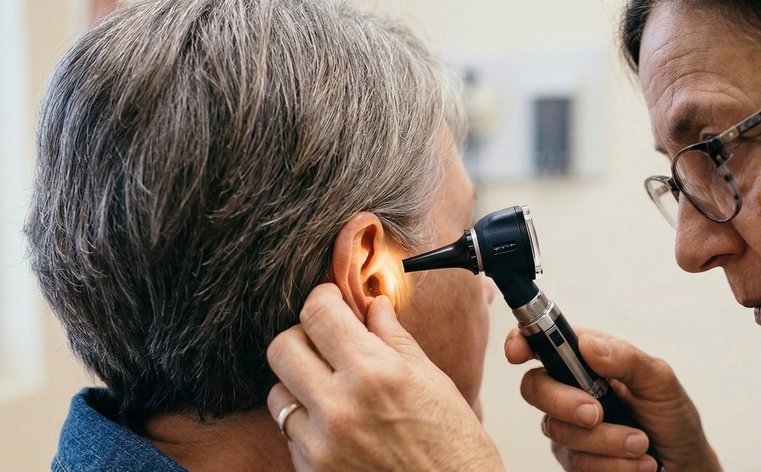
But is this being practiced? And there are some worrying reports that a few recently-trained doctors have difficulty using the ophthalmoscope and otoscope – basic competence which should be part of medical school training.
Paul Hyman lamented in JAMA: “The rise of telemedicine has apparently reduced the need for physicians to conduct physical examinations, especially in primary care, while biopsies, blood tests and scans have increasingly displaced inspection, palpation, percussion and auscultation as the physician’s primary diagnostic tools.” (Paul Hyman, The Disappearance of the Primary Care Physical Examination – Losing Touch, JAMA Internal Medicine August 2020:180 (11.)
History of the physical examination
For several hundred years, medical students have been taught the timeless principles of the clinical examination: inspection, palpation, percussion and auscultation. In Edinburgh, we had demonstrations weekly from a character called Dr. Batty who worked in a semi-circular clinical theatre where 10 of us at a time sat and watched the procedure. Dr Batty, I think, also saw himself as a bit of a Sherlock Holmes. I recall one morning when the first patient was summoned in. He walked from the door to the seat in front of Batty’s desk, pulled out his pocket handkerchief and blew his nose, Batty observing him.
“What do you see?” he said turning to us. Nobody answered.
“Oh, come on, use your eyes! Well, I see a middle-aged male, likely a coal miner, who’s arrived on the eight-o-clock bus from Prestonpans and who will tell us he’s recently been coughing up blood.”
We were impressed as the man agreed that he had indeed been coughing up blood, that he was a coal miner, and arrived on the bus from Prestonpans. Batty then pointed out the back of the man’s hands which had coal flecks in the skin, said that he knew the most active coal mine was near Prestonpans, and there was only one bus that would get him to the Royal Infirmary on time. Furthermore, had we not seen the blood stains on his handkerchief when he blew his nose?
We were impressed. He then took us through the palpation, percussion, auscultation chest exam, did an abdominal and cardiac exam, and sent him off for a chest X-ray. This teaching approach has been taken at medical schools for 300 years and more.
For a few years, I used to look around at people, looking for abnormalities in posture, gait or physical features and thought I was getting pretty good at it until I met Sir Ronald Bodley Scott (the late Queen’s physician) in my first attempt at the British Membership exam in 1972. During those days, there was a paper exam but, more importantly, a clinical exam with one long case and two short cases. The long case went OK and then I moved to the middle of the ward to where Sir Ron was sitting with an older male in a wheel chair.
After introductions, Sir Ronald said: “Have a look at this man, Paterson. What do you think of his face?” I looked and looked. The man was smiling at me. “He’s in hospital for treatment of an infectious disease,” said Sir Ron. There were no droopy features, his pupils were equal – only what I thought was a friendly smile. Not wanting to be rude I said: “His face looks alright, sir.” After a bit, Sir Ronald said: “Have you heard of Risus Sardonicus?” The penny dropped too late. I became badly rattled. “What disorder or disease can be associated with that?” he asked. I was now desperately flapping. “Um, tertiary syphilis?”
“No,” he said. “Thank you, doctor.” I left the ward, then tried to run back and mention strychnine but knew I was done for.
The annual physical examination
The annual physical exam used to be routine and well thought of, but recently has fallen into disuse. One meta-analysis of observational studies (i.e. non-controlled studies of groups having annual physicals, compared to groups who did not have annual physicals) showed a survival gain, but well-controlled, randomized studies of fit patients with half having a full annual physical exam and the other half not having an annual exam, have shown no survival advantage and even some disadvantages with unnecessary procedures.
The consensus is that they are not worth doing in the younger, fit person. However, the same examination in older individuals, say aged 65 years older, is more likely to have beneficial effects by picking up other conditions such as arthropathies, hypertension, pulmonary diseases and early skin malignancies. The doctor/patient relationship will also be strengthened. So the question remains open in a higher risk group (e.g. those people over 75) .
The ancient tradition of “laying on of hands” or “touch therapy.”
“And it happened that the father of Publius was lying in bed afflicted with recurrent fever and dysentery; and Paul went in to see him and after he had prayed, he laid his hands on him and healed him.” - Acts 28:8
"It is believed by experienced doctors that the heat which oozes out of the hand, on being applied to the sick, is highly salutary. It has often appeared, while I have been soothing my patients, as if there was a singular property in my hands to pull and draw away from the affected parts aches and diverse impurities, by laying my hand upon the place, and extending my fingers toward it. Thus it is known to some of the learned that health may be implanted in the sick by certain gestures, and by contact, as some diseases may be communicated from one to another." - Hippocrates, 5th Century B.C.
An interesting possible benefit of a physical examination is whether the well-being of the patient is improved by this activity. The historical opinion was that well-being was improved with some remarkable healing cures. The current consensus opinion is that a well-performed history and physical examination does indeed improve patient overall satisfaction.
Some have written about the interaction of electric fields of the examining hands and the patient’s skin but I have no evidence of that. Some talk of “God’s energy flowing through the hands to the diseased body part,” I suspect there can be a placebo type of effect which helps the patient’s mind – and perhaps body.
When I was thirteen, I had an attack of food poisoning with a painful gastritis, fever and malaise. My mother phoned our family doctor who came up to my bedroom, sat on the bed, felt my forehead, then pressed his hand in my epigastrium – at which with little warning I vomited, narrowly missing poor Dr. Sachs who seemed satisfied with the exam (my mother not so much). But I well recall feeling relieved and relaxed, and slept for the rest of the morning, comfortable with the diagnosis of gastro-enteritis. To an adolescent it seemed quite magical to me.
The practice of “laying on of hands” as ancient as it is diverse, crossing many cultures. The ancient Greeks laid hands on the afflicted often in temples dedicated to Asclepius, God of Medicine, healing and rejuvenation. And the laying on of hands in the Christian tradition crosses into many other religious practices. For example, in Judaism, in the Priestly Blessing, the “Kohanim”, bless the congregation with their hands. In Islam, the concept of “Barakah” embodies spiritual wisdom that is transferred through touch, by a person revered for their closeness to the Divine. Buddhism believes in the transfer of energy or “Metta”– the profound loving kindness that flows through the healer’s hands to alleviate suffering. Hinduism promotes “Pranic healing” where life force or “Prana” is transmitted by the healer’s touch. They all share belief in the power of touch.
Indigenous cultures share belief in the power of the Shaman with connection to their traditions and knowledge of sacred herbs. I recall looking after a lovely Stoney lady who had an aggressive breast cancer whom we persuaded with some difficulty to have a combination of drugs and Herceptin for this advanced cancer. She had a remission but after 18 months developed brain metastases. She asked to be looked after by her Shaman to which we agreed since it would involve so much more than our team was able to give.
A small study of 80 patients tried to determine the impact of "laying on of hands" on the well-being of patients with advanced cancer. Is it more efficient when performed by a person with self-declared healing powers compared to an actor mimicking the healer in close detail? This study showed an increased feeling of well-being was achieved in most patients whether the well-being was given by an actor or a self-professed healer.
And then there is Reiki, a practice originating in Japan, where the practitioner not only uses his own healing energy with a series of hand movements, but connects with other practitioners to reinforce these effects.
As a scientifically trained physician, I retain a scepticism as to the precise nature of the possible healing effects of touch power, although when beneficial placebo effects can be produced by belief, I’m happy to include them in the overall therapeutic effect. Some miraculous recoveries are simply the result of an incorrect or inaccurate diagnosis, as happens not infrequently with a poorly-considered prognosis from a practitioner inexperienced in the possible outcomes in patients with malignant disease.
An easy way to include the power of touch is a careful general or focussed physical examination which can then combine diagnostic help, with a useful helping of the ancient power of touch. This power is unlikely to be summoned by a fumbling, poorly rehearsed practitioner of the physical examination – and it’s our humble appeal for the continuation of the teaching of the physical examination and perhaps an upgrading of this teaching.
I feel sure that someone who has been well-taught, practiced, and organized can summon its placebo effects together with its valuable diagnostic help.
A few decades ago, the medical history accounted for some 80% of the ultimate diagnosis, the physical 10%, and the small remainder was attributed to tests. Physicians talked to their patients, not their computers. But the physical examination remains key in directing further investigations, management, and patient discussion.
Author's note: Thanks to Dr. Marty Atkinson and Dr. Eldon Shaffer (Calgary) and Dr. Mark Clemons (Ottawa) for their comments and suggestions.
Editor’s note: The views, perspectives and opinions in this article are solely the author’s and do not necessarily represent those of the AMA.
- What should Albertans expect from their health care system?
- Informed Reform campaign moves into phase III
- Patients First: Health care works best when it is shaped by the people who experience it every day
- Improving public awareness of an unseen medical speciality
- And 10 more articles in March-April 2026